Engineering Grievance Redressal Workflows Under DPDP Section 13
How to automate Grievance Redressal Officer (GRO) ticket workflows under DPDP Section 13. SLA clocks, rights intake portals, and Board escalation audits.
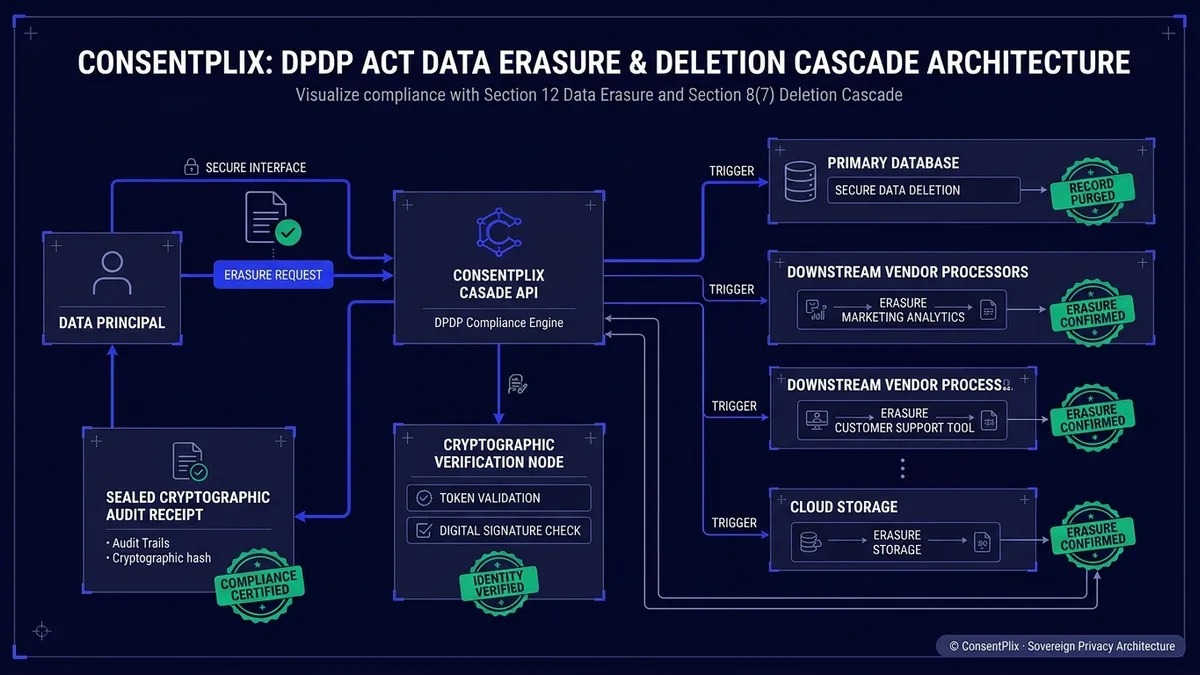
Architectural implementation guide for establishing automated statutory grievance redressal workflows under Section 13 of the DPDP Act 2023. Explains the mandatory designation and public disclosure of a Grievance Redressal Officer (GRO), the technical implementation of self-serve rights intake portals, automated 72-hour acknowledgment timers, and Board-ready compliance dossiers to prevent premature Data Protection Board of India escalations.
The Critical Role of Section 13 in the DPDP Framework
Under India’s Digital Personal Data Protection (DPDP) Act, 2023, the Grievance Redressal mechanism is not merely an optional customer service channel. It is a statutory prerequisite before any individual can file a formal complaint before the Data Protection Board of India (DPBI).
Under Section 13(1):
“A Data Principal shall have the right of grievance redressal provided by the Data Fiduciary or Consent Manager in respect of any act or omission of such Data Fiduciary or Consent Manager regarding the performance of its obligations in relation to the personal data of such Data Principal or the exercise of her rights under the provisions of this Act or the rules made thereunder.”
Critically, Section 13(3) provides that a Data Principal must exhaust the opportunity of redressing their grievance with the Data Fiduciary before making a complaint to the Board.
However, if an organization fails to respond to a grievance within the statutory timeline, or fails to publish the contact details of a designated Grievance Redressal Officer (GRO), the user can immediately escalate directly to the DPBI. Failure to fulfill fiduciary obligations under Section 13 exposes the company to statutory penalties up to ₹50 crore under The Schedule.
Here is how engineering and IT teams can automate Section 13 workflows to resolve grievances efficiently and maintain an airtight audit trail.
1. Architectural Blueprint: Automated Grievance Lifecycle
Handling statutory grievances via a generic support@acme.com inbox leads to lost requests, missed statutory deadlines, and untracked communication records.
A compliant grievance redressal system requires an automated ticketing pipeline:
+------------------------------------------------------------------------+
|                      DATA PRINCIPAL INTAKE PORTAL                      |
|  [User Submits Grievance on /rights or Mobile App Settings]            |
|  - Selects Issue Category: Access / Correction / Erasure / Unauthorized|
+-----------------------------------|------------------------------------+
                                    |
                                    v
+------------------------------------------------------------------------+
|                  GRO AUTOMATION ENGINE (AWS Mumbai)                    |
|  1. Generate Unique Ticket ID & Cryptographic Intake Receipt           |
|  2. Dispatch Immediate Statutory Acknowledgment via SMS / Email        |
|  3. Start Statutory Response Clock (e.g., 30-Day Resolution SLA)       |
+-----------------------------------|------------------------------------+
                                    |
        +---------------------------+---------------------------+
        |                                                       |
        v                                                       v
  [GRO Review Dashboard]                                [Automated Reminders]
  - Inspects User Identity                              - Day 7 / Day 21 Alerts
  - Initiates Database Queries                          - Escalation to DPO
  - Formulates Formal Response                          - Signs Resolution Hash
2. Technical Requirements for the Intake Portal
To fulfill Section 13 and the DPDP Rules, 2025, the grievance intake portal (typically hosted at yourdomain.com/rights or embedded within your mobile app) must provide:
- Clear GRO Identification: The notice must prominently display the name, official title, physical Indian address, and direct email address of the designated Grievance Redressal Officer.
- Authenticated Intake: The portal must verify that the individual lodging the complaint is indeed the Data Principal or their authorized representative, preventing unauthorized data disclosure.
- Structured Categorization: Users must select from defined statutory rights:
- Summary of personal data processed (Section 11).
- Correction and updating of inaccurate data (Section 12(1)(a)).
- Erasure of personal data (Section 12(1)(b)).
- Unauthorized processing or security breach concerns (Section 8).
- Multilingual Access: Intake forms must offer options in English and Eighth Schedule languages under Section 5(3).
3. Automated Timers and Escalation SLAs
The DPDP Rules establish strict timelines for handling Data Principal grievances. When a ticket is created:
- Immediate Acknowledgment: The system dispatches an automated SMS/email acknowledgment within seconds, containing the Ticket ID, timestamp, and expected resolution timeline.
- SLA Clock Execution: An internal counter monitors ticket age. If a ticket remains unresolved within 14 days, automated alerts trigger to the Data Protection Officer (DPO) and senior legal counsel.
- Audit-Sealed Resolution: When the GRO resolves the grievance, the final determination, along with any database action proofs (such as an erasure certificate), is bundled into an immutable PDF dossier signed with HMAC-SHA256.
4. Preventing Premature DPBI Board Escalations
When an organization maintains a transparent, highly responsive grievance redressal portal, Data Principals have zero reason—and no immediate legal standing under Section 13(3)—to report issues to the Data Protection Board of India.
In the rare event that an unsatisfied user does file a complaint before the Board, the organization can immediately present the Board with an unalterable chain-of-custody log:
- Proof of exact date and time the grievance was received.
- Full transcript of communications between the GRO and the Data Principal.
- Proof that statutory verification and resolution steps were executed within mandated timelines.
Deploying an Automated Grievance Portal with ConsentPlix
Setting up a custom grievance portal does not require building complex ticketing infrastructure from scratch. ConsentPlix provides a turnkey Data Principal Rights & GRO Portal natively hosted in AWS Mumbai (ap-south-1).
To deploy a branded, compliant grievance redressal portal for your organization, review our Data Principal Rights Portal Solutions or explore our DPDP Compliance Services today.
Ajay Thanki
Co-Founder & Head of Privacy EngineeringWorks on Merkle audit proofs, tamper-evident data pipelines, and cross-regulation compliance for banking, fintech and enterprise teams.
Continue exploring sovereign compliance engineering.
Ready to deploy provable consent infrastructure?
Deploy in minutes with our sub-12KB SDK or schedule a customized technical consultation with our privacy engineering team.